
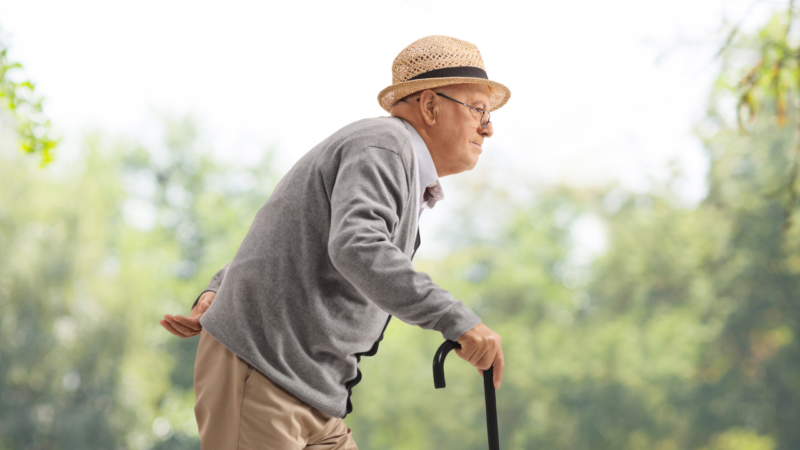
Noticing changes in our posture and mobility as we age is very common, particularly when it comes to walking. One standout concern is the “stooped-over” posture we often see when elderly individuals use a walking frame or walker.
This posture not only can affect people’s physical health, but also impact their self-confidence and overall quality of life. Fortunately, there are several strategies and exercises that can help improve posture, as well as promote better mobility and independence, as we get older.
Understanding the importance of good posture
Maintaining good posture is crucial for individuals of all ages, but it becomes especially important for elderly people.
Proper posture can have a significant impact on physical health, including reducing the risk of falls, muscle strain, and joint pain. Additionally, good posture can enhance breathing and digestion while boosting self-esteem and confidence.
It has a lot going for it!
Common causes of stooped posture
Before diving into solutions, it’s essential to understand the underlying causes of stooped posture in seniors. Here are five main ones:
- Muscle weakness: Over time, muscles naturally weaken, which can affect posture. This weakness can be due to aging, sedentary lifestyles, or medical conditions.
- Osteoporosis: Osteoporosis can lead to a loss of bone density and height, contributing to a stooped appearance.
- Joint issues: Conditions like arthritis can cause pain and stiffness in the joints, making it difficult to maintain an upright posture.
- Poor balance: Diminished balance and coordination can lead to a forward-leaning posture for added stability.
- Fear of falling: A fear of falling can cause seniors to hunch over or lean on their walking frames for added support.
Ways to improve posture when walking
Before implementing any changes, it’s crucial to consult a healthcare professional such as a GP or a physiotherapist. They can assess your specific needs and create a tailored plan for improving your posture and mobility.
Such health professionals can be invaluable in conducting regular mobility assessments to track your progress and also to see if they need to make any adjustments to the walking aids if you’re already using one.
Physiotherapists can also help with prescribing a tailored strength and conditioning program to target the relevant muscle groups to maintain a more upright posture (below are some examples of exercises).
For some people, flexibility and stretching might become an integral part of their daily routine to improve tightness and stiffness in muscles and joints. This can be achieved via a prescribed program, or through group classes like yoga and tai chi.
Lastly, having the right type of footwear can make a significant difference in how people walk, which then has a flow-on effect on their overall confidence in walking. From the cushioning of the shoes to the material used, to how they actually fit. Having the right shoes can play a bigger role than we think, and can have a positive effect on any anxieties around fear of falling as well.
Three exercises to help with posture
Improving posture in older people often involves a combination of exercises to strengthen the muscles that support an upright posture, and to increase flexibility. Here are three exercises, along with detailed instructions, you might like to try:
Wall Angels:
Wall Angels are a fantastic exercise for improving posture as they strengthen the muscles of the upper back and shoulders while promoting shoulder mobility.
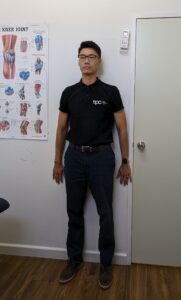
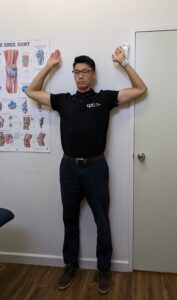
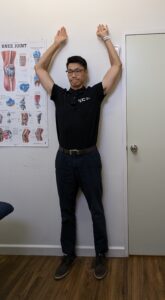
- Step 1: Stand with your back against a wall, feet hip-width apart.
- Step 2: Place your heels, hips, upper back, and head against the wall.
- Step 3: Bend your arms at 90-degree angles, with your upper arms parallel to the ground.
- Step 4: Slowly slide your arms up the wall, keeping your elbows, wrists, and hands in contact with the wall.
- Step 5: Raise your arms as high as comfortable while maintaining contact with the wall.
- Step 6:Lower your arms back down to the starting position.
Perform 2-3 sets of 10-12 repetitions daily.
Chin Tucks:
Chin tucks are excellent for strengthening the neck and upper back muscles, which can help correct forward head posture.
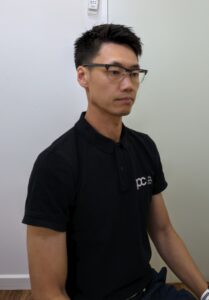
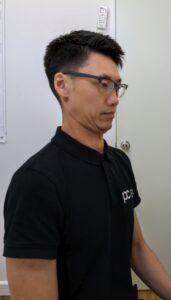
- Step 1: Sit or stand with your shoulders relaxed.
- Step 2: Gently draw your chin back, like you’re trying to make a “double chin.”
- Step 3: Keep your eyes level, and do not tilt your head up or down.
- Step 4: Hold the tucked position for a few seconds.
Relax and repeat 2-3 sets of 10-15 repetitions daily..
Bridge Exercise:
Bridges target the glutes, lower back, and core muscles, all of which are essential for maintaining an upright posture.
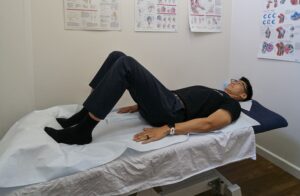
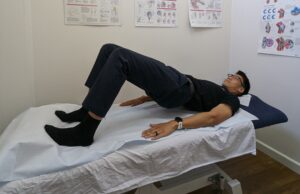
- Step 1: Lie on your back with your knees bent and feet flat on the floor.
- Step 2:Place your arms at your sides with palms facing down.
- Step 3: Lift your hips off the ground by engaging your glutes and lower back.
- Step 4: Hold the bridge position for a few seconds.
- Step 5: Lower your hips back to the ground.
Perform 2-3 sets of 10-12 repetitions daily.
Conclusion
Helping our elderly clients improve their posture when walking can significantly enhance their overall wellbeing and quality of life.
By implementing a combination of strength training, flexibility exercises, proper walking aids, and lifestyle adjustments, TPC’s physiotherapists can support you in maintaining an upright posture, reducing your risk of falls, and promoting independence and confidence as you get older.
As always, listen to your body and consult a TPC physiotherapist if you experience persistent pain or discomfort while exercising. If you’d like to discuss having a physiotherapy assessment to provide some tailored advice, our friendly Client Care team would love to help.
Article written by Tony Kim – physiotherapist and clinical coach
____________________
The Physio Co helps Aussie seniors to move more, with confidence! How can we help you (or your elderly Mum or Dad?) Contact us today on 1300 797 793 and speak with Nancy, Julia and Jess from the TPC Client Care team to discuss your situation. If they’re busy on other calls, leave a message and someone from the team will call you back for a chat! Alternatively you can email us via [email protected]


 1300 797 793